Valentine’s Day is supposed to be the Super Bowl of Love.
Big gestures, big expectations, big pressure. But somewhere along the way, we got sold a fairytale version of relationships where the right person makes everything effortless, passion never fades, and if it’s meant to be, you’ll just know.
Real relationships, the kind that survive and thrive, aren’t built on magic.
They’re built on pillars: shared goals, shared values, clear communication, trust, and mutual respect. These aren’t the sexy parts of love we see on Instagram, but they’re the reason relationships last.
For this Valentine’s Day episode, we looked at relationships that have stood the test of time and asked five leaders in love two simple and powerful questions:
- What is the biggest relationship myth you once believed that you’ve changed your mind about?
- What is the pillar that actually keeps your relationship still standing today?
Some of their answers might surprise you. Some might challenge what you’ve been taught. And some might give you permission to release a version of love that was never actually serving you in the first place.
Because this Valentine’s Day, you don’t need to chase a fairytale. You need to rewrite the myths and live your own love story.
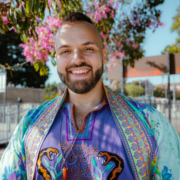
 (04:00) John Kim: Love Isn’t Easy Just Because You Did The Work
John Kim, aka The Angry Therapist, has been with his partner for 8 years. He’s a therapist, podcast host, and bestselling author of books like Single on Purpose and I Used to Be a Miserable F*ck.
He shared:
“The greatest myth about love that I have proven to be untrue is that if you work through wounds and attachment styles and learn to fight without fighting and go to therapy and all that, then love will be easy.”
Here’s what nobody tells you: working on yourself isn’t a one-time thing. It’s not a constant. It’s an everyday thing.
John and his partner are in their 40s and 50s. Things like perimenopause and ADHD and raising children showed up in ways they never anticipated because they’d never been this age before.
Love is a constant growing, evolving greenhouse, and even when it’s healthy, there are hard days. The work of choosing each other and growing from that container is a lifelong process.
His Pillar: The Importance of Repair
“If you can’t both learn how to repair, the plane will eventually go down. Repair is at the top.”
When you show up ready to do the work with your partner and to learn with them, there are always moments for repair. And those moments of repair don’t just repair the relationship with your partner. Sometimes they repair something deeper in yourself.
(08:00) Carol Allen: Love Can Sneak Up on You Like Moss
 Carol Allen is a Vedic astrologer and relationship coach of 35 years. She’s been with her husband for 33 years, and she’s one of the leaders in examining how we build a successful love life.
She shared:
“What I now know to be true that I didn’t used to think was true is that you can fall in love slowly. Love can sneak up on you. I joke now that there’s two ways to fall in love: you can be struck by lightning, which of course can lead to scorched earth, or you can be struck by moss and then wake up one day and everything is green.”
That was how Carol and her husband fell in love.
They both felt a connection, and then gradually grew to realize this beautiful thing was happening that has lasted all these years.
This is a major theme in F the Fairytale: true connection develops over time.
It’s not instant chemistry. It’s slow love, building connection and rapport, seeing how somebody shows up for you, building it block by block, and then the attraction actually deepens.
Her Pillar: Always Be On Each Other’s Side
“The biggest pillar of long-term love is to always be on each other’s side. Always make the other person feel emotionally seen and validated and cared about. If you always feel like they are on your side, that even when there’s a conflict, you’re gonna get through it because it’s you and the other person working on the conflict as opposed to going at each other.”
Studies all over the world confirm this: both people need to be happy.
You can’t be happy with an unhappy person. So if you find someone you can love, who loves you, who’s happy and likes their life and likes the people in their life and likes themselves? 90% of your job is done for you.
(12:00) Orna & Matthew Walters: Shared Values Are The Glue
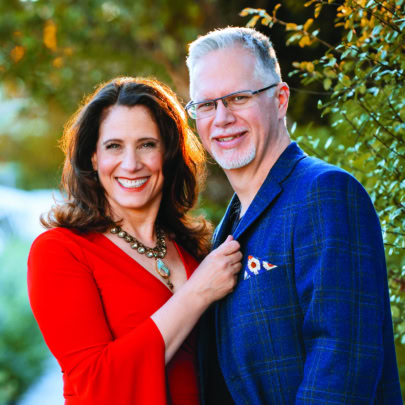 Orna and Matthew Walters are the co-founders of LoveOnPurpose.com and authors of Getting It Right This Time. They’ve been together for 19 years, married 17, and they both found love later in life in their 40s.
Orna shared her myth:
“A myth I used to believe about love is that all the good ones were taken. I used to be really attached to that story.”
Matthew shared his:
“One of the biggest myths I believed about love was that if you hung around a friend long enough that eventually they might change their mind to become a romantic partner.”
All the good ones are taken.
Sound familiar? It’s a limiting belief that shows up in every decade.
When we get overly focused on the options that aren’t available to us, we miss what’s right in front of us. You have the power to rewrite your own love story, starting today.
Getting friend-zoned and waiting for the tide to turn?
While there are stories of friends who fell in love years later, a lot of times you find that you don’t have the attraction piece. And if you’re perpetually friend-zoned, that could be a sign you’re choosing unavailable people or reading signals incorrectly.
Their Pillar: Shared Values
“We can’t think of anything that separates from that. Shared values is it. It’s the most important thing. You’re going to have disagreements, you might have conflict or misunderstandings. And when you have shared values, it makes it very easy to get back on the same page again.”
When you look at the world in the same way and believe the same things about who we are as humans and how we live our lives, that’s worth so much more than shared interests or physical attraction. That’s the kind of thing that aligns a couple: you and your partner against the world.
(19:00) Lily Womble: You’re Never Too Much for the Right Person

Lily Womble is the author of Thank You More Please, founder of Date Brazen, and a feminist dating coach. She’s been with Chris for 8 years, married for almost 3.
She shared:
“My biggest dating myth that I used to believe is that I was too much to find the right partner. I was socialized to believe that as a woman, I needed to make my needs smaller, make my wants smaller, that I was being too picky, that I was being too judgmental if I set boundaries with the wrong people for me.”
This socialization led her to settle hardcore and judge herself for wanting what she wanted.
She ended up in terrible romantic relationships with people who could not meet her needs.
Now she knows: it’s really human and normal to want what you want and you are never too much for the right person. You can never say the wrong thing to the right person for you.
Her Pillar: Game to Play and Co-Create
“A pillar of long-term love that is crucial is someone who is game to play and game to co-create. This language comes from improv: you’re game to co-create, you’re game to listen and react and play together. That sense of playfulness and co-creation has served me so well.”
Co-creation means:
- Planning the first date together
- Defining the relationship together
- Getting out of your own way sometimes
- Being creative with your partner and being open to listen
- Being open to receive the kind of love and support you desire
We start out as kids playing all the time, then we learn to adult and lose that sense of play. Bring it back. Even if you’re not partnered yet, bring back that sense of play in your life today and you will find others who want to play with you.
 (25:00) Seth Hoffman: Real Love Soothes the Heart and Soul
Seth Hoffman is a TV writer/producer and Damona’s husband of 18.5 years.
He shared:
“The one myth about love that I used to believe is that when people were in love, their feelings were just at a 10 all the time. It was just all these big feelings all the time and it was hard to even think straight because you are in love. That kind of love feels like your heart going really fast. The kind of love that I experience and the kind of love that I really cherish is a kind of love that slows my heartbeat down and makes me feel calm and safe.”
We’re so addicted to rom-coms and fairytales. They tell us it should be dramatic, high and low, intensity all the time.
But when you’re looking for the trust and the answer out of the gate, you’re going to come up with tons of questions.
When you’re committed to slow love and building it over time, then the trust will unfold naturally. Then it becomes obvious: this is the person you want to build your life with and pour into and have invested in you.
His Pillar: Trust Above Communication
“The one pillar that I think is most important is trust. My stock answer used to be communication, and I think communication is really important. But for me, above and beyond communication is trust. If you fully trust the person you’re with and you know that the person you’re with fully trusts you, then you know that if they’ve done something that pisses you off, that the intent isn’t to piss you off.”
Before you even start communicating to understand what happened, you go into that conversation knowing the thing that upset you wasn’t intentional. It’s just a conversation about what happened as opposed to believing there might be ulterior motives.
Trust is the final pillar in F the Fairytale, and it’s the pillar that takes the longest time to build.
 Stop Chasing the Fairytale
If there’s one thing to take away from these conversations, it’s this: long-term love doesn’t fail because people don’t want it badly enough. It struggles because we’ve been handed myths that were never designed to support real human relationships.
We were taught that love should be effortless, that the right person will heal your wounds, that conflict is a sign you chose wrong, and if it’s meant to last, you won’t have to work so hard at it.
But every one of these relationships survived not because the fairytale came true, but because someone was willing to question it. To replace a myth with a pillar. To stop waiting for love to save them and start building love that could actually hold them.
That’s the heart of F the Fairytale. It’s not about becoming cynical. It’s about becoming empowered. It’s about rewriting the stories that keep us stuck in dating and relationships and creating a love story that actually fits your life.
💌 If today’s episode resonated, pick up F the Fairytale and start questioning the myths you inherited. Start building the kind of love that can actually last.
Find it on Amazon, Barnes and Noble, or from your local bookseller. Links at fthefairytalebook.com.
💌 Got a question about revenge reporting, trusting your gut when you can’t explain why, handling retaliation for setting boundaries, or navigating dating apps safely?
Whether it’s about ghosting that feels safer than communicating, dealing with people who won’t take no for an answer, getting banned unfairly, or any other challenge in the relationships that matter to you, we’re here for all of it.
Send your question in a DM or voice memo on Instagram, TikTok, or Facebook, or send a voicemail or text to 424-246-6255. It might just be featured in an upcoming Dear Damona segment.
And remember: Dates & Mates covers all the relationships that matter in your life: romantic partnerships, friendships, family dynamics, work relationships, and most importantly, the relationship you have with yourself.
📝 Ready to track what’s working (and what’s not) in your dating life? Download the free Date Tracker at damonahoffman.com/datetracker. It helps you see patterns and move forward with clarity